A surface and planning check
We tell you whether the rules cover the wall, roof or ground you have in mind.
Read this oneChecked againstThe 2026 rules
You getA yes or a no
Plug-in Solar England / Fitting and outdoor sockets
Plugging in is yours. A weatherproof socket outdoors is an electrician's, and we'll find one near you.
The product specification is written for devices meant to be installed and operated by ordinary people, so you do not need an electrician to plug one in.
Anything that touches the house wiring is an electrician’s job. Testing or altering the electrical installation is work for a qualified electrician, and so is changing the overcurrent protection device on the final circuit if that is needed to connect. If you have any doubt about a socket, the instructions say to have an electrician inspect it. It is also worth telling your insurer.
The inverter, the plug and the socket may sit indoors or outdoors. Outdoors, the socket must carry an IP55 rating or better. That is the part most homes do not already have, and it is the part we get priced for you.
The specification bans extension cables, multi-way adaptors, RCD adaptors and travel adaptors, and it says so twice: once on the device marking and once in the instructions. That matters most in a garden, where an extension lead is the obvious shortcut.
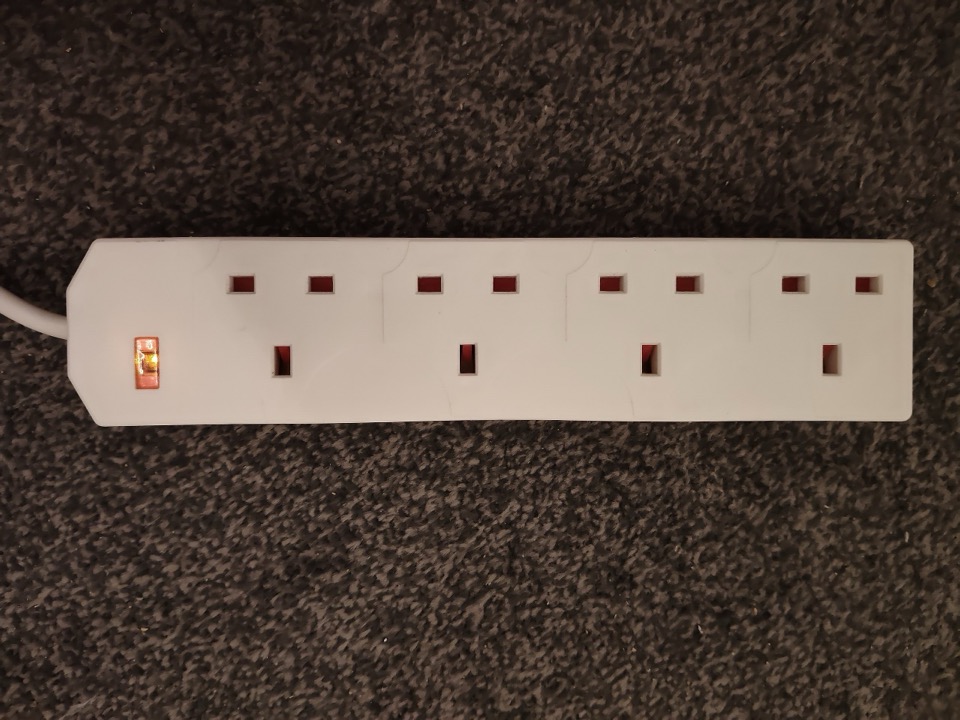
Multi-way blocks, adaptors and extension leads are all out. The device goes into a socket on the house, and where there is no socket in the right place, fitting one is the electrician’s job.
These are the limits from the product specification, and a kit that misses one of them is not in the approved class whatever the listing says.
Manufacturers have to register a device on the ENA Type Test Register and get confirmation that it was assessed as compliant before it goes on sale, so the register is the check to make before you buy anything.
Not to plug the device in. You do need one to fit a new socket, to test or alter the house wiring, or to change the overcurrent protection device on the circuit.
No. The specification allows one per final ring circuit, and the network rules are tighter than that: one device per household.
No. Extension leads, multi-way blocks, RCD adaptors and travel adaptors all sit outside what the specification allows.
Give us the postcode and the material the surface is made from. We will tell you where that leaves you.
Check my postcodeWe tell you whether the rules cover the wall, roof or ground you have in mind.
Read this one
We name the network operator for your region and send the notification with you.
Read this onePostcode and region. We'll name your operator and check the rules.
Name, email, postcode, the region you're in, and where the panel would go. We email back with your operator, the rules for that spot, and what it should make in a year.